

 By
By Introduction
Every year, businesses in the U.S. lose millions of dollars due to undelivered mail, delayed packages, and wrong addresses. Sounds frustrating, right? Whether you’re an eCommerce store owner, a logistics manager, or a customer service leader, one truth holds: verifying a postal address before sending mail is your first line of defense.
In our data-driven world, ensuring your shipping information is correct helps you avoid unnecessary costs, returned packages, and upset customers. Welcome to the world of postal address verification, a powerful process that ensures the address you’re mailing to actually exists and is complete and correct.
If you’re in the U.S. and working with customer data, understanding this process is essential in 2026. This guide covers everything you need to know about it, from its meaning to how it protects your company’s reputation and revenue.
What Is Postal Address Verification?
Postal address verification is the process of checking if a mailing address is valid, real, and complete. This method confirms whether the address is recognized by the United States Postal Service (USPS). Businesses use software or services to verify addresses before mailing, shipping, or storing customer records. Here’s a simple breakdown:
- Verified Address: Recognized by USPS and ready for delivery.
- Unverified Address: May be wrong, mistyped, or nonexistent.
Why it matters
Even one wrong letter or missing ZIP code can result in a returned package, causing delays and extra costs for your business. Used in industries like
- eCommerce
- Banking
- Insurance
- Healthcare
- Retail
Verification services are also essential for customer onboarding forms, CRM systems, and marketing outreach campaigns.
Why Do Wrong Addresses Happen?
There are many reasons mail goes to the wrong place or comes back undelivered. According to USPS:
- Change of Address (33.08%): The person moved but didn’t tell USPS.
- Undeliverable-as-Addressed (26.4%): The address is missing something (like an apartment number).
- Attempted, Not Known (14.06%): The person doesn’t live there, or the name is wrong.
So, if you don’t verify addresses before sending mail, it could be returned, lost, delayed, or even sent to a stranger!
This can be a big problem, especially if the mail has private info inside, like medical bills or bank statements. In healthcare businesses, this could even lead to HIPAA violations (which come with heavy fines).
What ‘s the Cost of Bad Address Data?
Here are some ways that wrong addresses hurt businesses:
- Returned mail fees
- Re-shipping costs
- Wasted staff time
- Unhappy customers
- Lost payments and missed sales
According to the US Data Quality Institute
| Problem | Estimated Loss per Year in the U.S. |
| Returned mail | $2 billion+ |
| Failed deliveries | $1.3 billion |
| Trust lost from customers | Immeasurable |
| Manual data fixes | 20+ hours/month per team |
That’s a lot of money, frustration, and time your team could spend doing more important things!
How Does Postal Address Verification Work?
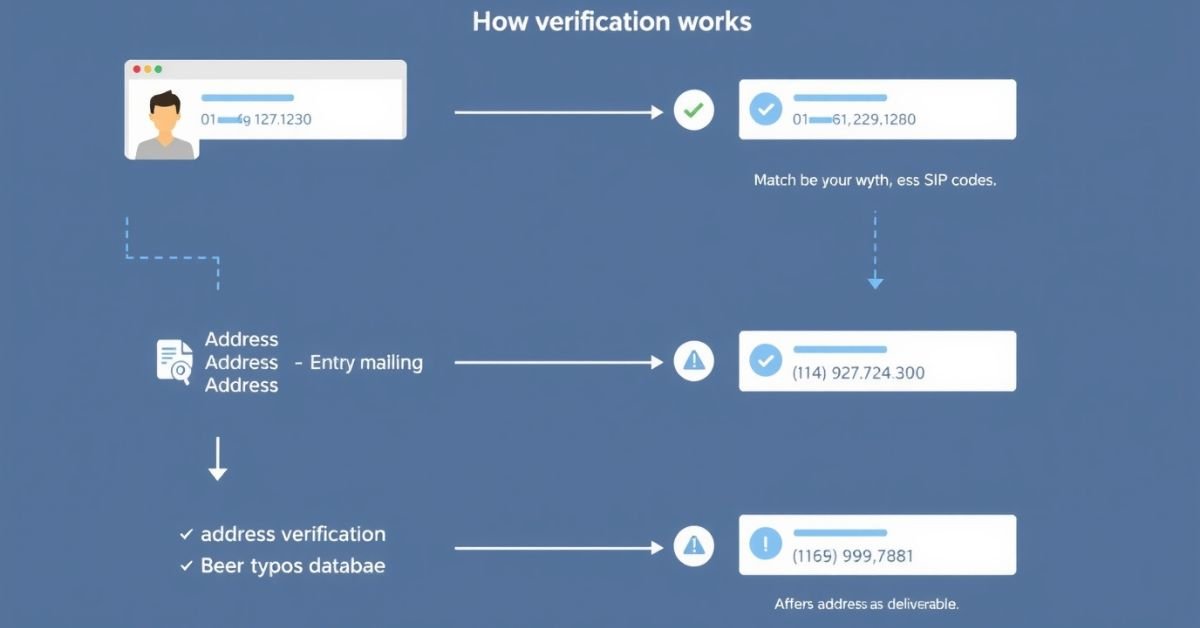
Let’s break it down with a simple example.
Imagine your customer typed this when placing an online order:
“123 Main Street, Los Angeles, CA 90012”
It has a few spelling errors and the wrong city name. Address verification systems remedy it like this:
Here’s What Happens
- The system finds the errors (like “Main Street” and “Los Angeles”).
- It corrects the spelling and fills in missing parts.
- It checks with the USPS database to see if the address really exists.
- It says, “Yes, you can send mail here” if it’s genuine.
Most companies use APIs (Application Programming Interfaces) to perform this work instantly using software such as Smarty (formerly SmartyStreets).
- Smarty (formerly SmartyStreets)
- Lob
- Melissa
- USPS Address API
These tools establish connections with backend systems, such as your website or CRM, to conduct real-time address checks prior to shipping or mailing.
Address data cleansing has three steps
This process is often called “address cleansing.” It has 3 main steps:
Standardize
Make sure every address uses the same format (like “St.” instead of “Street,” or putting ZIP codes in 5-digit format).
Correct
Fix any spelling mistakes, missing apartment numbers, or wrong street names.
Validate
Check the cleaned address against the USPS or global database to make sure it’s a real, deliverable location.
Who Needs Postal Address Verification?
Almost every kind of business can benefit from Postal Address Verification, including:
- Banks and insurance companies to avoid fraud and follow laws (like KYC).
- Healthcare providers send medical bills and protect sensitive patient info.
- eCommerce stores to avoid delivery mistakes and returns.
- Logistics and shipping companies to route packages efficiently.
- Government agencies for mailing notices, checks, or voting materials.
Even small businesses, like a local bakery offering home delivery, can use address verification to avoid sending cakes to the wrong houses!
How It Improves Customer Experience
Customers notice when things go wrong but they also notice when they go right.
Imagine this:
- You order something online, and it arrives on time.
- The package has your full, correct name and address.
- You didn’t need to call support or fix anything afterward.
That feels pretty wonderful, right?
Verified addresses help deliver smooth experiences like this. In fact:
80% of customers say shipping speed and accuracy affect whether they’ll buy again.
(Source: UPS Pulse Survey 2026)
When you verify addresses:
- Mail and packages arrive faster.
- There are fewer customer complaints.
- Customers are more likely to come back.
- You get better reviews.
Address Verification Keeps You Compliant & safe
In some industries, it’s not just useful; it’s required by law.
For example:
- Banks need to verify addresses to meet Know Your Customer (KYC) rules.
- Hospitals must follow HIPAA laws to avoid sending patient info to the wrong homes.
- Insurance companies have to verify that policyholders really live at the addresses they provide.
Postal address verification helps companies stop:
- Fraud
- Identity theft
- Legal trouble
- Lost time fixing problems
How to Choose the Right Tool
Here’s what to look for in a good address verification tool:
- Real-time validation
- Can check big batches of addresses
- CASS-certified (approved by USPS)
- Finds and corrects typos
- It adds ZIP+4 codes.
- Easy to use and connect with your systems
Some tools are free (like USPS), but limited. Others (like Smarty or Lob) are faster and work better for bigger businesses that ship many items. Make sure the tool updates its data often, especially if you’re working in fast-growing areas with new buildings or neighborhoods.
FAQs
What does postal address verification mean?
It’s the process of checking, correcting, and confirming mailing addresses against postal data (like USPS).
How can I verify a U.S. address?
You can use tools like USPS Lookup or third-party APIs like Smarty or Lob.
Why are my packages returning to the sender?
It could be due to invalid, outdated, or incomplete addresses. Verification helps prevent this.
Can small businesses use address verification tools?
Yes! Most tools offer free trials or pay-as-you-go models, perfect for startups.
Is address verification required for KYC or compliance?
Yes, especially in banking and finance, accurate address data is required for legal compliance.
Conclusion
Postal address verification is a simple yet powerful solution that helps businesses avoid costly mistakes caused by incorrect, incomplete, or outdated addresses. Whether you’re sending bills, packages, or important documents, verifying addresses ensures faster delivery, fewer returns, better customer service, and improved data accuracy. It also helps protect your reputation, reduce expenses, and stay compliant with industry regulations.
By using easy-to-integrate tools and systems, any business, large or small, can make sure their mail gets to the right place the first time. Starting postal address verification now is a smart step toward smoother operations and happier customers.